
That Pretty Yellow Plant Could Cost You Your Home
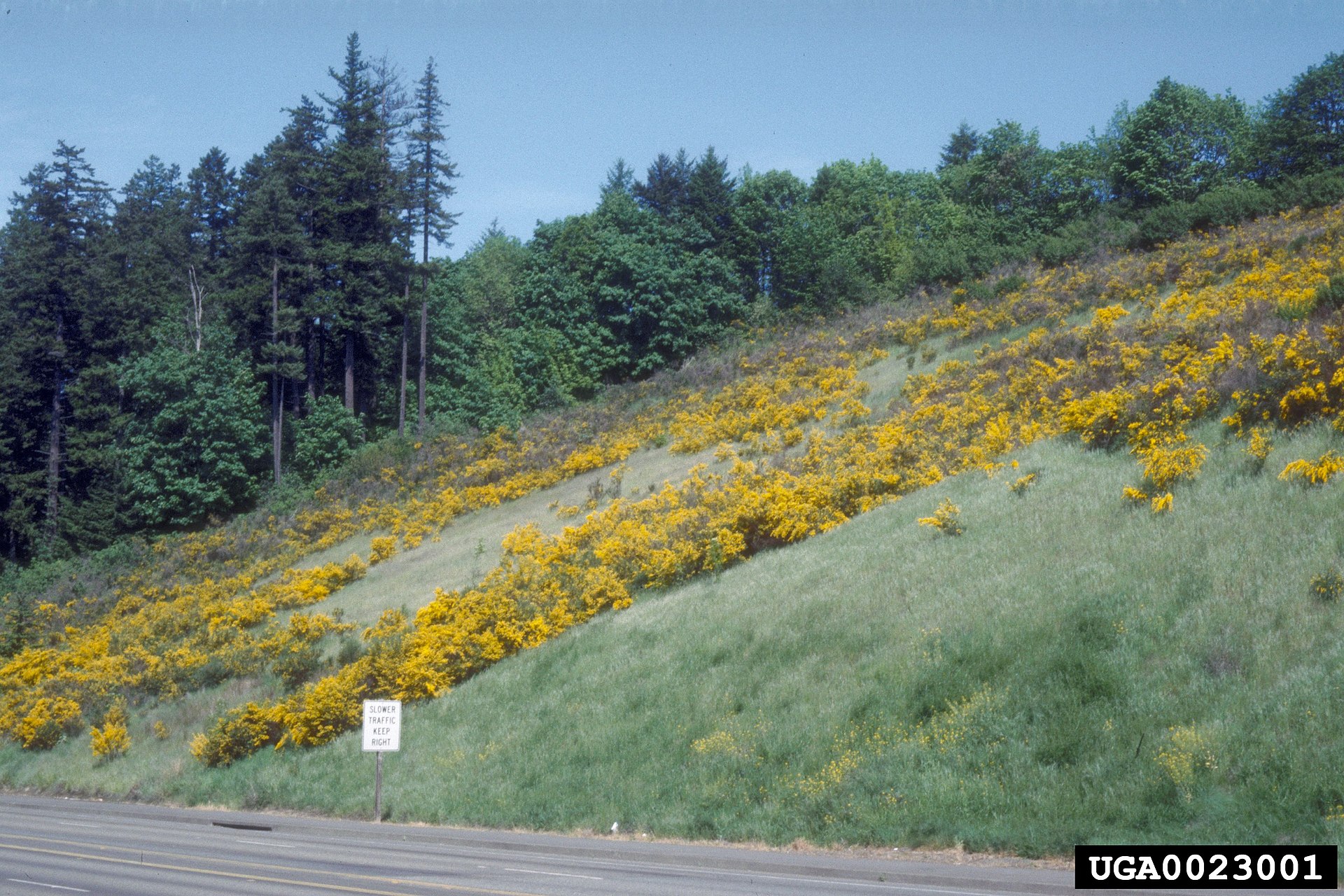
I want to talk to you about something I see on properties all over the Santa Cruz Mountains. You’ve probably seen it too, maybe even on your own land. It has bright yellow flowers in the spring and it looks almost cheerful growing along the hillside. It’s called scotch broom, and it is one of the most dangerous things on your property.
After everything our community has been through, the fires, the evacuations, the letters from insurance companies telling us they won’t cover us anymore, I think you deserve straight talk. So here it is.
Scotch broom burns. It burns hot, it burns fast, and it burns easily. The plant contains oils in its stems that make it almost eager to catch fire. Even when it looks dried out and dead in late summer, it’s still loaded with that combustible material. And because it grows in thick stands, sometimes six feet tall, a fire that starts on the ground can climb right up through the broom and into your trees, and from there toward your house.
Here’s something else most people don’t know. One plant can produce up to 18,000 seeds in a single year, and those seeds can sit in your soil and wait for thirty years. If a fire has come through your area, the heat actually wakes the seeds up and they grow back thicker than before. This is not a plant that gives up easily.
And this matters right now for all of us living up here. Insurance companies are looking at what’s on your property. They are looking at fire risk and defensible space. California already requires 100 feet of defensible space around your home, and a hillside covered in scotch broom is exactly what an underwriter does not want to see. In a time when insurers are already pulling out of our market, this is not something to put off until next season.
The good news is you can do something about it. Young plants pull right out of the ground after a good rain, just get the root and you’re in good shape. For bigger plants, cutting them at the base before they flower in late spring weakens them over time. For really stubborn ones, a cut-stump treatment with herbicide tends to work best. Just don’t chip or compost the plants on your property if they’ve already gone to seed, because the seeds will spread.
If you’re not sure where to start, the Santa Cruz County Resource Conservation District and your local Fire Safe Council are good resources. Some programs will even count invasive plant removal toward your defensible space compliance.
You can email the Santa Cruz county Resource Conservation District: info@rcdsantacruz.org or visit their website for more information on what they do: https://www.rcdsantacruz.org